
Stainless vs Carbon Steel Pipe Nipples: Which Should You Use?
You’re doing a BOM, checking specs, and this old question pops up again:
“Should I use stainless steel pipe nipples or carbon steel pipe nipples here?”
If you pick wrong, you don’t just lose a few fittings.
You get rust complaints, brown water, leaks, even shutdowns that nobody wanna sign for.
In this article we’ll walk through real job conditions and see where stainless steel pipe nipples make sense, and where carbon steel pipe nipples are the smart workhorse.
We’ll also plug this into what GuoCao / Jingcheng Hardware actually supplies: custom, bulk, OEM / ODM for construction, machinery, hardware chains and exporters.
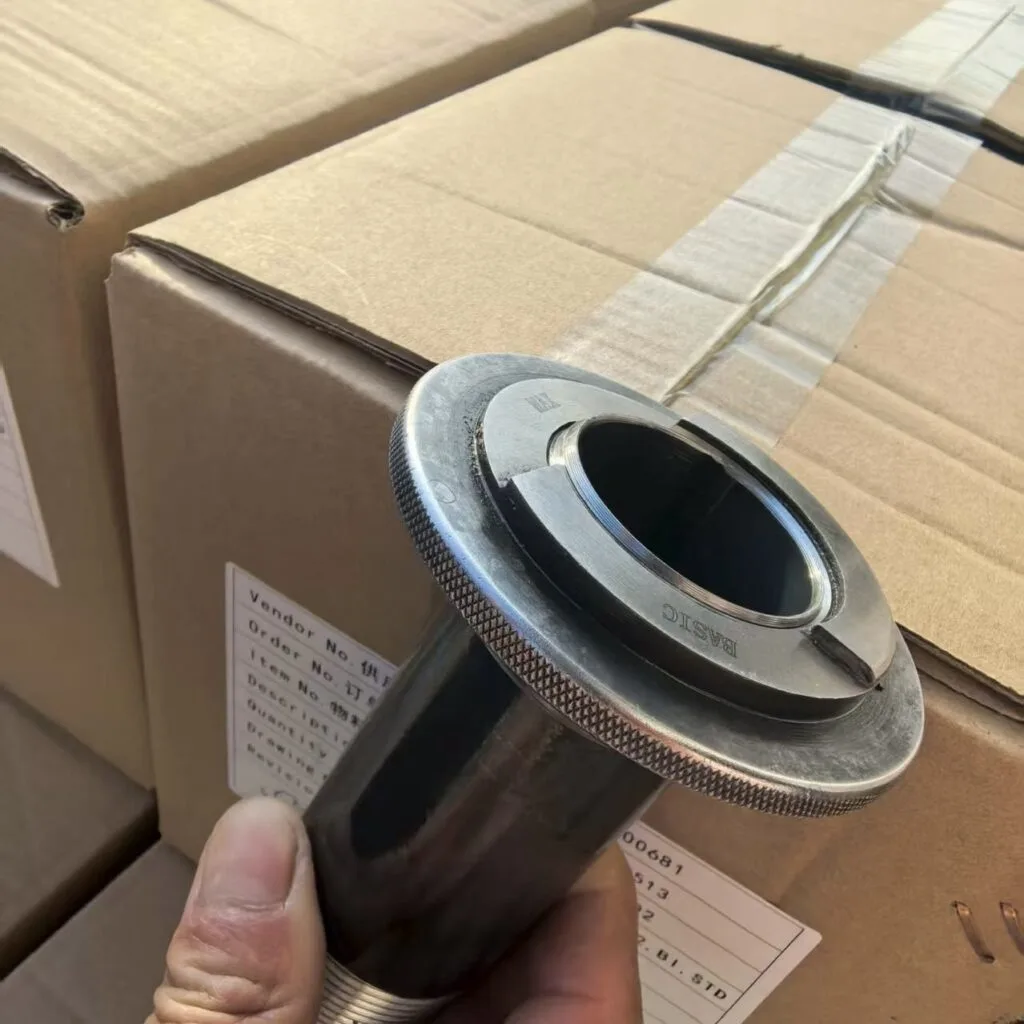
Stainless Steel Pipe Nipples vs Carbon Steel Pipe Nipples Overview
At the simple level, both are short threaded pieces of pipe.
Both connect two female threaded components.
Both can be seamless or welded.
The real difference sits in the material behavior:
- Stainless steel pipe nipples
- 304, 316, 316L, with chromium for surface passivation
- Better corrosion resistance in wet, salty, or slightly chemical lines
- Used a lot in fluid transfer, industrial plumbing, clean water and higher-end equipment
- Carbon steel pipe nipples
- Black steel or coated steel
- Strong, rigid, and cost-effective in mild environments
- Common in heating and chilled water loops, compressed air, gas lines, furniture frames
Jingcheng Hardware positions itself as a One-Stop Custom Carbon Stainless Steel Hardware Manufacturer, so you don’t need one vendor for stainless nipples and another for black steel. You can mix both families under one roof, plus fittings, elbows, and valves.
Corrosion Resistance of Stainless Steel Pipe Nipples and Carbon Steel Pipe Nipples
When the line is wet, outside or gets wash-down, corrosion is the first question.
Why Stainless Steel Pipe Nipples Survive Better in Wet Service
Stainless steel contains chromium that forms a thin “passive” film on the surface.
This film slows down rusting a lot. If it gets scratched, it can reform itself in many environments.
That’s why stainless steel pipe nipples used in fluid transfer lines last longer where you have:
- Cooling water and process water
- Light chemical media
- Outdoor or coastal installations
- Frequent wash-down around the line
In those spots, carbon steel nipples can pit, flake, and stain the medium pretty fast.
Stainless nipples just sit there and do the job.
Where Carbon Steel Pipe Nipples Still Make Sense
Carbon steel is not evil.
It just hates oxygen + water + time.
If you put carbon steel pipe nipples inside a closed, treated heating or chilled water loop, with almost no oxygen and controlled pH, they can run very stable for years.
Typical carbon steel scenes:
- Boiler rooms with closed hot water
- Chiller rooms with closed chilled water
- Dry indoor compressed air systems
- Pipe furniture and racks where the black look is part of the design
Your catalog of carbon steel pipe nipples—close length, short threaded adapters, BSP male threaded joints, threaded tube coupling—targets exactly those jobs. They are strong, easy to thread in, and cost is friendly when the environment is under control.
Pressure, Temperature and Service Life of Pipe Nipples
On the pressure side, both materials can handle serious work if the wall thickness and schedule are picked right.
- Carbon steel usually has higher yield strength per cost.
- Stainless steel keeps its performance better across a wide temperature range, especially under wet or chemical exposure.
Your stainless steel pipe nipples designed for heavy-duty use are meant for high-load, continuous duty service. Thick wall, precise male threads, suitable for high-pressure water, oil and gas systems.
On the carbon side, the close length threaded fittings and short threaded tube adapters are perfect when:
- You have tight spool space
- You want minimal overall length between valves / tees / elbows
- The pressure is high but the environment is dry or closed-loop
In the real world:
- Hot-cold cycling with moisture and chemicals → stainless wins on service life.
- Stable temperature, closed loop, dry plant room → carbon steel is more than enough, and cheaper to buy in bulk.
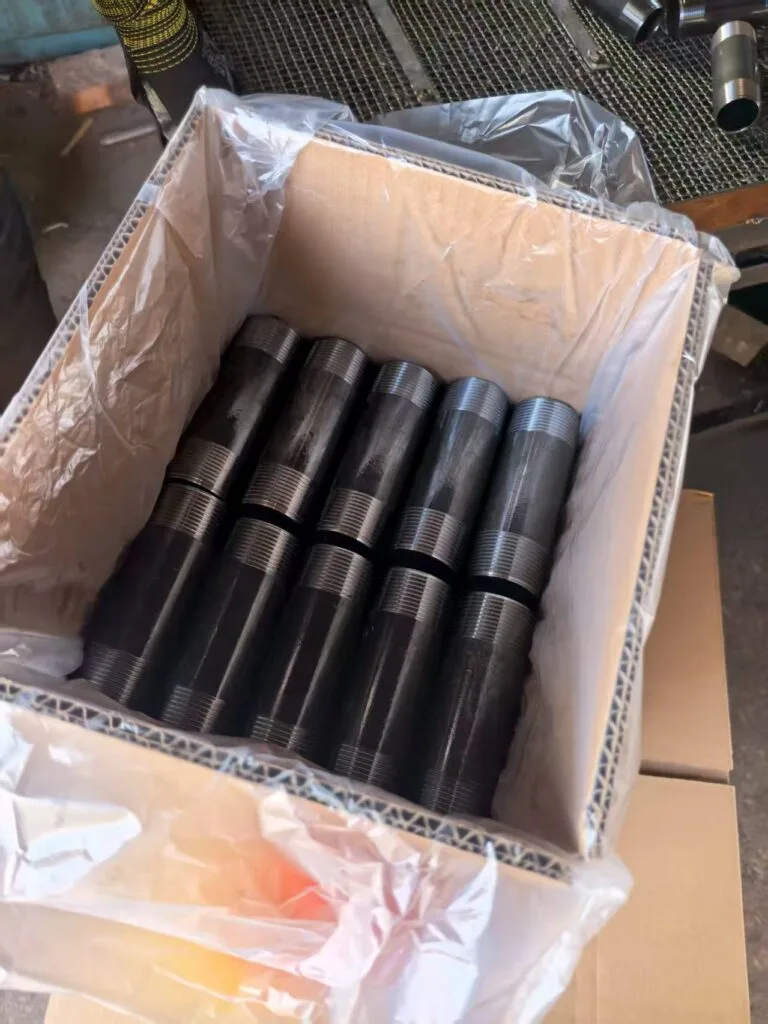
Hygiene Requirements for Stainless Steel Pipe Nipples in Industrial Plumbing
As soon as the fluid touches people or product, the discussion changes.
Stainless Steel Pipe Nipples for Industrial Plumbing Systems
Your stainless steel pipe nipples for industrial plumbing systems target:
- Factory water and process plumbing
- Industrial gas and light chemical lines
- General HVAC and utility pipelines
The inner surface is smoother and less likely to rust or flake. That matters in:
- Potable water lines
- Food and beverage utilities
- Pharmaceutical clean utilities
- Clean industrial water skids
Nobody wants brown water or tiny rust flakes in a line that feeds production or taps.
Here it’s simply safer and more professional to go stainless all the way: nipples, fittings, elbows, valves.
Why Carbon Steel Is Risky in Clean Water
You can run carbon steel on some water systems, but:
- It can rust on the inner wall
- Loose oxides can get carried downstream
- After shutdown, you may need long flushing to clean the line
So for critical clean water and hygienic zones, stainless steel pipe nipples are the default choice.
Carbon steel might still appear on the fire loop or heating side, but not where people drink.
Cost and Maintenance Comparison for Pipe Nipples
Nobody has infinite budget. So let’s be honest about money.
Carbon Steel Pipe Nipples: Lower Upfront Cost, Higher Care
Carbon steel pipe nipples:
- Cheaper per piece in general
- Easy to machine and thread
- Strong and stiff
But they need help:
- Coating, paint or galvanizing outside
- Closed-loop and treatment inside
- Regular inspection for rust spots and coating damage
If the environment stays dry and oxygen is limited, this is fine.
If the environment is wet, salty, or dirty, this turns into a maintenance plan.
Stainless Steel Pipe Nipples: Higher Ticket, Lower Headache
Stainless steel pipe nipples:
- More expensive per piece
- Much more relaxed in wet, coastal, wash-down, and chemical surroundings
- Often give you longer service life with less touch-up
In a plant with tight shutdown windows, stainless can reduce:
- Emergency leaks
- Rush orders for replacement nipples
- Extra man-hours in tight spaces
So the question is not just “how much is this nipple today?”.
The better question is:
“How many times do I wanna go back and fix this line?”
If the answer is “hopefully never,” stainless starts to make real sense.
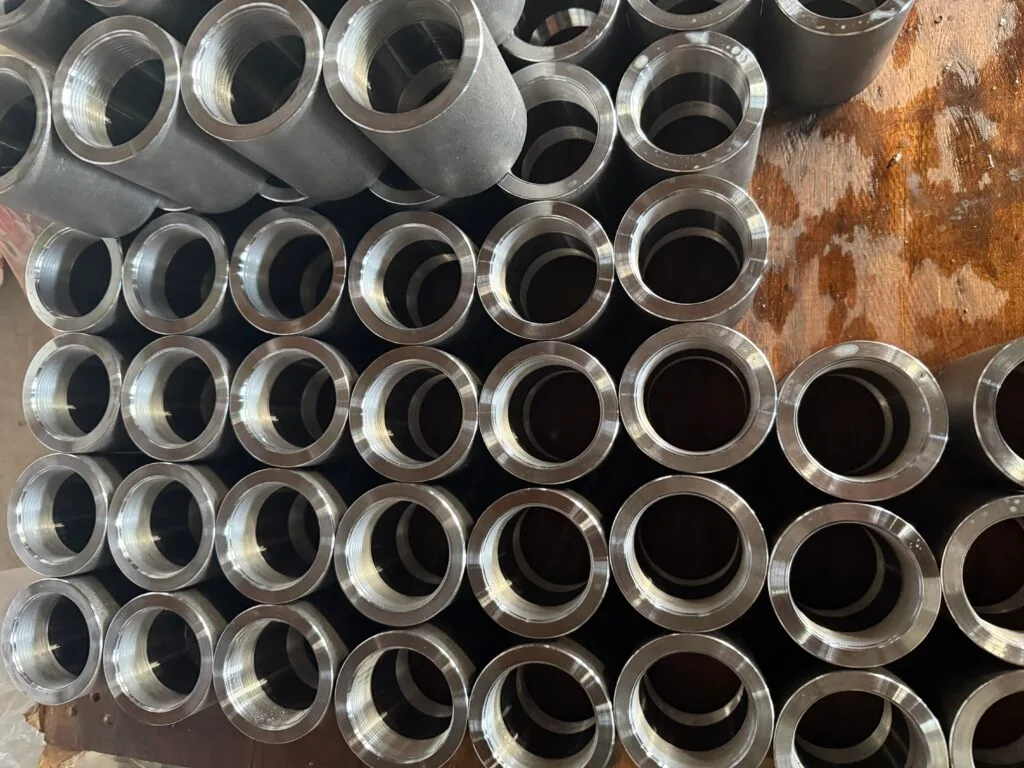
Comparison Table: Stainless Steel Pipe Nipples vs Carbon Steel Pipe Nipples
You can copy this table straight into a product page.
| Factor | Stainless Steel Pipe Nipples | Carbon Steel Pipe Nipples |
|---|---|---|
| Corrosion behavior | Very good in water, humidity, mild chemicals; surface passivates | Rusts fast in wet or salty air if not protected; okay in dry or closed loops |
| Hygiene | Cleanable, smooth, no rust flakes in normal service | Can shed rust and scale into fluid over time |
| Pressure & strength | High strength with proper schedule; stable under temp swings | Very strong, widely used in pressure piping with right schedule |
| Temperature | Handles wide range, good under hot–cold cycling with moisture | Strong at medium temps; condensation accelerates corrosion |
| Maintenance | Mostly inspection and cleaning; little surface work | Needs coating, water treatment and more frequent checks |
| Upfront cost | Higher piece price | Lower piece price |
| Typical scene | Fluid transfer, industrial plumbing, chemical, marine, clean water, higher-end OEM | HVAC loops, compressed air, gas lines in dry space, furniture, racking |
| Visual | Clean metallic look, good for visible high-end equipment | Black/galvanized look, fine for back-of-house and structural work |
Typical Use Cases for Stainless Steel Pipe Nipples
From your stainless range, we can see three main clusters of usage.
Stainless Steel Pipe Nipples Used in Fluid Transfer Lines
These are for:
- Cooling and process water circuits
- Light chemical transfer
- Systems with frequent temperature changes
Here stainless gives better stability, less pitting, and less “mystery leaks” over time.
Stainless Steel Pipe Nipples for Industrial Plumbing Systems
These go into:
- Industrial plumbing networks in plants
- Building services with mixed media (water, gas, oil)
- Projects where the client expects a clean, modern look
Add in stainless steel fittings, king nipples, threaded 90° elbows, welded and seamless threaded pipe fittings, and you can build a full stainless branch from valve to valve with one supplier.
Stainless Steel Pipe Nipples Private Label NPT / BSPT
For hardware chains, importers and distributors, stainless nipples under private label offer:
- Your own logo on the product or packing
- Thread types to match target market (NPT, BSPT, BSPP)
- Consistent finish, carton design, and barcodes
This is where GuoCao’s OEM/ODM capacity really matters. You don’t just buy parts. You build your brand’s hardware line.
Typical Use Cases for Carbon Steel Pipe Nipples
Now the carbon side.
Carbon Steel Pipe Nipples Close Length Threaded Fitting
Close nipples are used when:
- You need two fittings or valves almost back-to-back
- Space is tight inside cabinets or machine frames
- You want minimal extra length in the assembly
Great in HVAC, machinery skids, and tight industrial layouts where every millimeter counts.
Carbon Steel Pipe Nipples Short Threaded Tube Adapter Bespoke
Short adapters solve those awkward “half-length” situations:
- Changing distance between components without redesign
- Tuning spacing in manifolds or small headers
- Connecting to custom housings on machines
Because GuoCao offers bespoke options, you can match drawing, thread, and length exactly.
Carbon Steel Pipe Nipples Threaded Tube Coupling Private Label
These are more for:
- Furniture and display frames
- DIY shelves and racks
- Light industrial supports
Here customers often want a “black steel” look, and cost is key.
Carbon nipples with consistent threading and private label packaging let hardware stores and supply chains push their own brand, not somebody else’s.
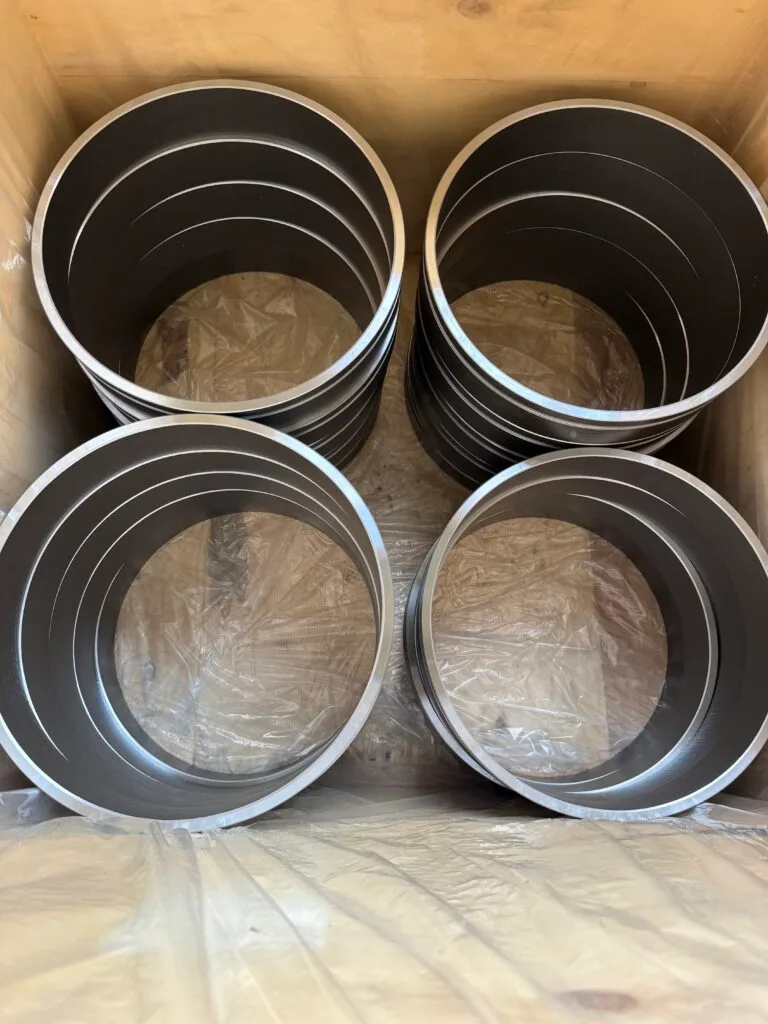
OEM, ODM and Private Label Pipe Nipples with GuoCao
Jingcheng Hardware is not just selling single boxes.
The core value is customization plus volume:
- OEM/ODM
- Custom lengths, diameters, wall thickness
- NPT, BSPT, BSPP threads
- Matching elbows, fittings, flanges, welded and seamless parts
- Private label
- Branding on product or packaging
- Full ranges of stainless steel pipe nipples and carbon steel pipe nipples
- Support for Construction Companies, Industrial Machinery Manufacturers, Hardware Stores, Exporters
For buyers that ship containers, manage big distribution, or build machines, this is important.
They don’t want ten suppliers with ten quality levels.
They want one partner who understands leak risk, pressure rating, thread tolerance and end-user pain.
That’s where GuoCao fits in.
Quick Selection Guide for Stainless vs Carbon Steel Pipe Nipples
When you choose material next time, run through this short checklist:
- Is the line wet, outdoors, washed down, or near chemicals?
- Yes → lean to stainless steel pipe nipples.
- Is the fluid drinking water, food-related, or clean utility?
- Yes → stainless, no debate.
- Is it a closed, treated loop in a dry plant room?
- Yes → carbon steel pipe nipples can be the cost-effective workhorse.
- Will you accept repainting and possible swap-outs later?
- Don’t want that → go stainless.
- Okay with that in mild service → carbon can be fine.
- Do you need private label or custom specs?
- Want premium look for export or retail → stainless private label range.
- Want big, low-cost range for furniture and industrial lines → carbon private label range.
If you follow these few points, your pipe nipples stop being an afterthought that bites you later.
They become a quiet part of the system that just works, whether you go stainless or carbon, as long as you match the right material with the right scene and let GuoCao do the custom and volume work behind it.