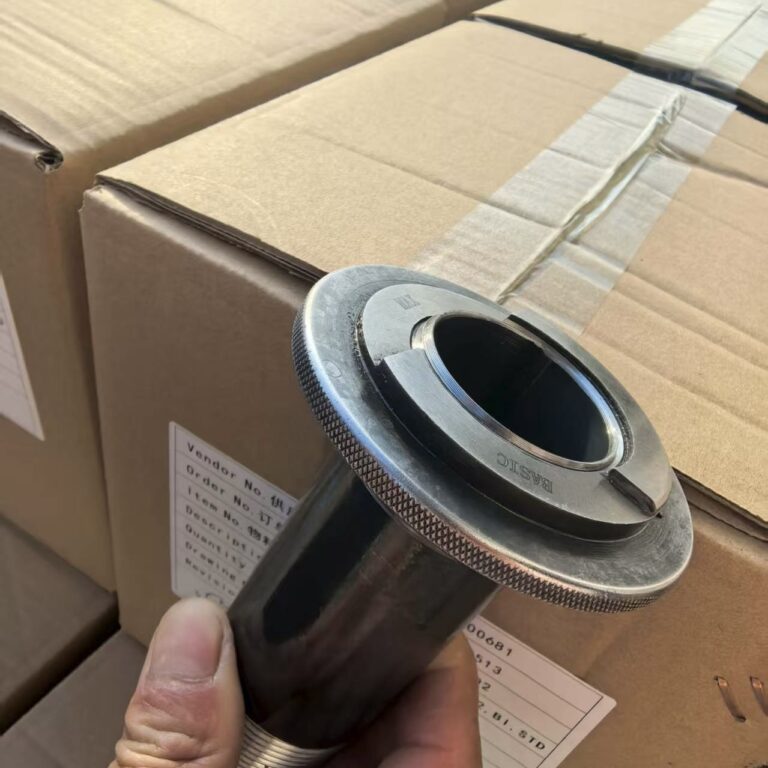
Stainless vs Carbon Steel Pipe Nipples: Which Should You Use?
If you’ve worked with threaded piping long enough, you already know one thing.
Most system failures don’t come from bad design.
They come from wrong material choices.
Someone picks carbon steel where corrosion lives.
Someone upgrades to stainless where it isn’t needed.
Both cost money.
Both create downtime.
So let’s walk through this like people who actually build systems — not like catalog writers.
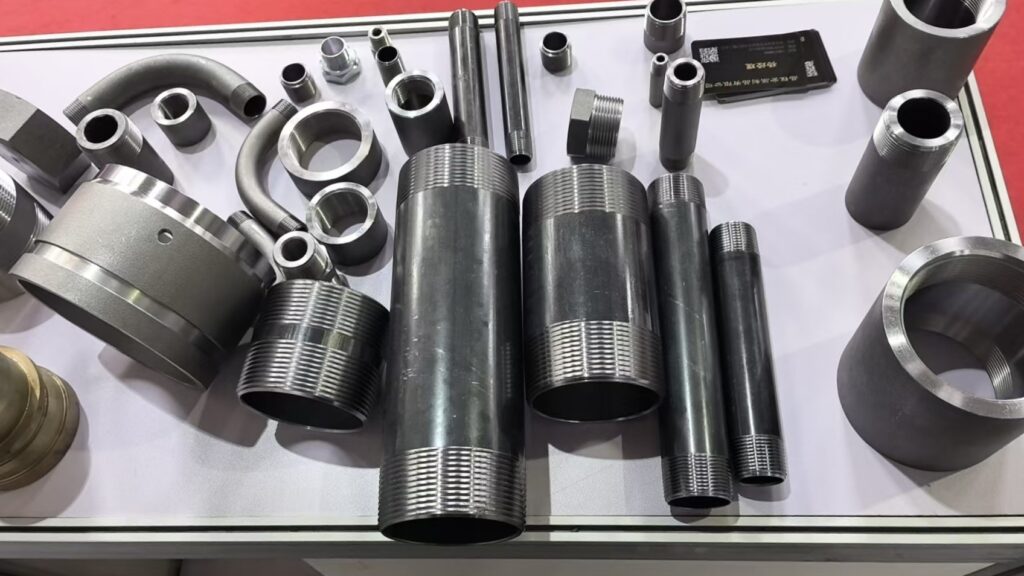
Corrosion Resistance in Stainless Steel Pipe Nipples vs Carbon Steel Pipe Nipples
Corrosion is usually the real decision maker.
Why Stainless Steel Pipe Nipples Survive Harsh Environments
Stainless steel protects itself.
The chromium inside the alloy reacts with oxygen and forms a thin protective layer on the surface.
Once it forms, rust struggles to start.
That’s why stainless steel pipe nipples last in:
chemical plants
food processing lines
coastal facilities
humid mechanical rooms
When chloride exposure increases — salt air, bleach, industrial cleaners — 316 stainless performs even better than 304.
You don’t need paint.
You don’t need zinc coatings.
The metal handles it naturally.
Why Carbon Steel Pipe Nipples Rust Over Time
Carbon steel doesn’t have that protection.
In dry indoor systems, it runs for years without trouble.
Once moisture stays around, corrosion starts creeping in.
Galvanizing slows it down.
But it never stops it.
When coatings wear, bare steel shows up.
Rust follows.

Pressure and Mechanical Strength in Real Piping Systems
Strength is where carbon steel earned its reputation.
Carbon Steel Pipe Nipples for Heavy Industrial Loads
Carbon steel handles:
high pressure steam
oil and gas flow lines
fire protection piping
structural mechanical systems
It’s tough.
It absorbs stress well.
It rarely cracks under load.
That’s why construction and energy projects still rely on it every day.
Stainless Steel Pipe Nipples When Strength Meets Stability
Stainless steel holds pressure too — especially seamless threaded pipe fittings.
But its real value appears when pressure and corrosion exist together.
High temperature chemicals
washdown systems
outdoor exposed pipelines
You get strength without long-term decay.
304 vs 316 Stainless Steel Pipe Nipples — The Real Difference That Matters
This choice decides many failures.
Where 304 Stainless Steel Pipe Nipples Work Well
304 stainless performs great in:
indoor piping
general industrial fluids
food systems without aggressive cleaners
HVAC water loops
If chlorides stay low, 304 lasts decades.
Where 316 Stainless Steel Pipe Nipples Prevent Future Problems
316 includes molybdenum.
That small addition blocks chloride attack.
It becomes critical in:
coastal projects
marine equipment
chemical handling
frequent sanitation environments
In those places, 304 eventually pits.
316 keeps going.
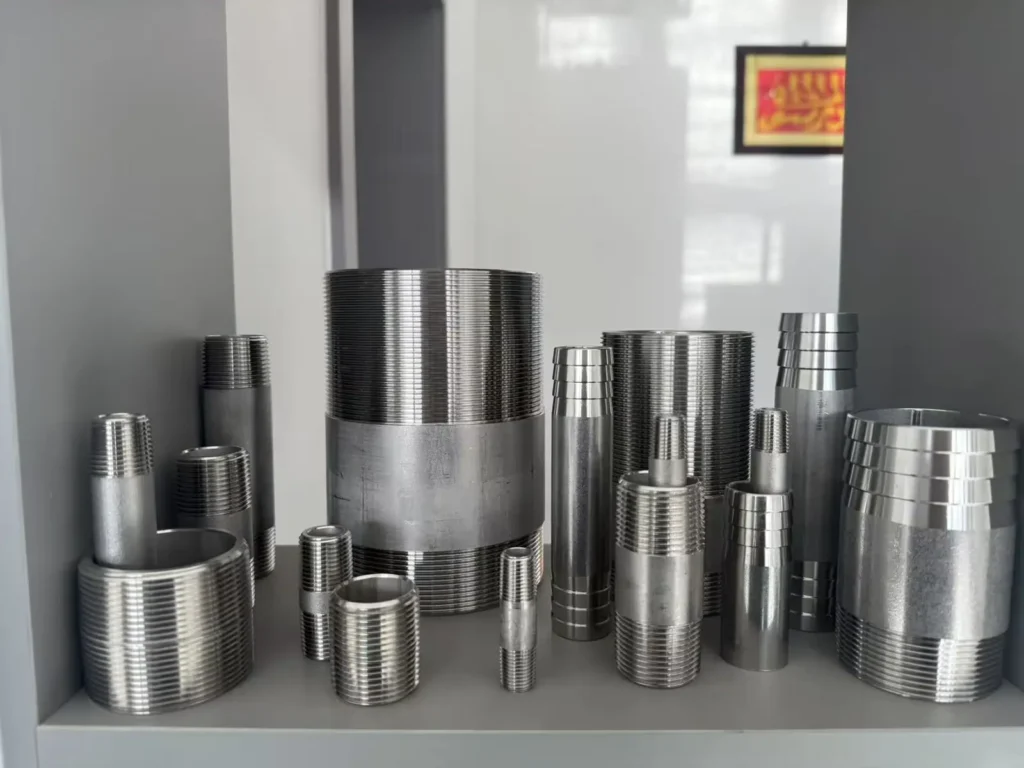
Stainless vs Carbon Steel Pipe Nipples — Practical Comparison
| Factor | Stainless Steel Pipe Nipples | Carbon Steel Pipe Nipples |
|---|---|---|
| Corrosion behavior | Naturally resistant | Requires coating or dry service |
| Best environments | wet, chemical, coastal, sanitary | dry indoor, general industry |
| Long-term maintenance | minimal | moderate to high |
| Pressure capability | strong | very strong |
| Common grades | 304, 316, 316L | black steel, galvanized |
| Typical industries | food, pharma, chemical, marine | construction, oil & gas, HVAC |
How Engineers Actually Choose Pipe Nipples on Site
Instead of debating material names, good teams ask four questions.
What’s flowing inside the pipe?
Clean water?
Steam?
Chemicals?
Cleaning agents?
What’s the environment outside the pipe?
Dry warehouse
humid plant floor
outdoor coastal exposure
How often will maintenance happen?
Yearly inspection
constant washdown
almost never touched
How long must it last?
Short project life
20-year facility
critical infrastructure
Once those answers are clear, the material usually becomes obvious.
Where GuoCao Fits into Professional Piping Projects
GuoCao supports projects where material selection actually matters.
Most buyers come for:
custom stainless steel pipe nipples in 304 and 316
seamless threaded pipe fittings for pressure systems
stainless steel elbows and welded threaded fittings
bulk OEM production for distributors and contractors
When carbon steel makes more sense, GuoCao also supplies:
black steel pipe nipples
galvanized pipe nipples
king nipples
threaded elbows for industrial systems
Everything built for large volume, consistent quality, and engineering standards.
The Cost Trap Many Projects Fall Into
Cheap steel looks good on purchase orders.
Until corrosion creates:
leaks
shutdowns
labor repairs
replacement cycles
In harsh environments, stainless almost always wins long term.
In dry systems, carbon steel works perfectly.
The mistake is using one material everywhere.