
If you buy pipe nipples for real jobs, you already know this problem. The drawing looks simple. The line size is simple. The thread is simple. But the service temperature is not simple at all.
A lot of buyers ask one direct question: which one handles temperature better, carbon steel pipe nipples or stainless steel pipe nipples? The honest answer is this: stainless steel usually gives you a wider safe temperature window, while carbon steel works well in normal duty and budget-sensitive jobs. The best pick depends on heat, cold, thermal cycling, pressure drop at temperature, and the media moving through the line. That is where many projects get burned, or frozen, or start leaking at the threads.
On paper, this sounds like a material question. In the field, it is a downtime question. It is a leak path question. It is a rework question. And for distributors, OEM buyers, project contractors, and supply chains, it is also a sourcing question. You don’t just need a nipple. You need the right threaded piece, right material, right schedule, right thread standard, and stable batch consistency. That is exactly why buyers on projects like fire protection, plumbing, HVAC, industrial plants, and OEM skid packages keep comparing stainless and carbon steel before they place bulk orders. Your site already speaks to those use cases, and it also shows that mixed categories, OEM, custom lengths, and wholesale supply are core parts of the offer.
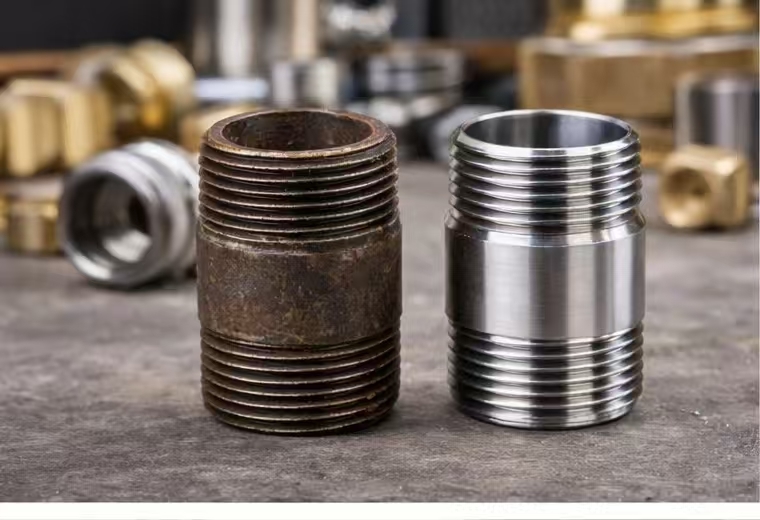
Carbon Steel vs Stainless Steel Pipe Nipples: the Real Temperature Tolerance Difference
Let’s keep it plain. Carbon steel pipe nipples handle common service temperatures well, but stainless steel pipe nipples usually cover a broader range, especially at very low temperature and in hot-wet or corrosive heat.
Common reference data for carbon steel pipe service often sits around -29°C to 425°C, with warnings that ordinary carbon steel should be avoided above about 425°C because of graphitization risk and other high-temperature limits. Stainless piping references for common grades such as 304 and 316 show a much wider low-temperature capability, and many engineering references put stainless in a higher practical upper temperature band too, depending on exact grade and code conditions.
That means one thing for buyers:
if your line sees cold shock, outdoor winter exposure, steam cleaning, hot washdown, repeated startup-stop cycles, or chemical service with temperature swings, stainless gives you more breathing room. Carbon steel still has a solid place, no doubt. But its comfort zone is narrower.
Temperature Range of Carbon Steel Pipe Nipples
Carbon steel pipe nipples are popular for a reason. They are rugged, familiar, easy to source in bulk, and a very practical fit for fire protection, gas piping, general industrial service, and standard plumbing runs. Your website also positions carbon steel pipe nipples this way, especially for plumbing, gas, fire protection, and industrial systems.
Where Carbon Steel Pipe Nipples Work Well
Carbon steel is usually the right call when the line is:
- in a normal ambient range
- under steady service, not crazy cycling
- not exposed to aggressive corrosion
- cost-sensitive and volume-heavy
- tied to standard contractor stock and repeat specs
This is why so many contractors still use black steel pipe nipples or carbon steel threaded fittings in mechanical rooms, sprinkler piping, utility lines, and equipment tie-ins. It is proven stuff. It gets the job done.
Where Carbon Steel Starts to Struggle
Problems show up when people push carbon steel outside its sweet spot.
At higher temperatures, the allowable stress drops. In simple words, as temperature goes up, the material loses pressure-handling margin. That matters at the threaded ends, because threads are already stress concentrators. You may not see failure on day one. But over time, heat, load, vibration, and corrosion start stacking up. That is when callbacks happen.
At low temperatures, standard carbon steel can also lose toughness. That is why deep-cold service needs more care. If the service dips well below normal freezing conditions, regular carbon steel may stop being the easy answer.
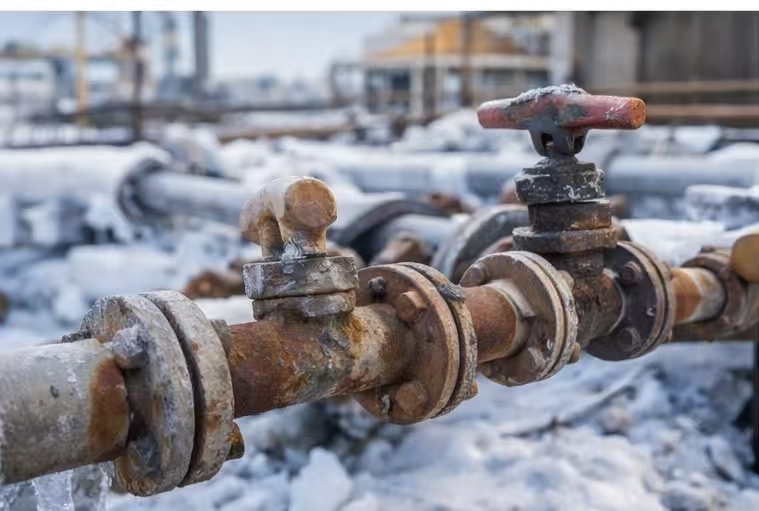
Temperature Range of Stainless Steel Pipe Nipples
Stainless steel pipe nipples, especially 304 and 316 stainless steel pipe nipples, are often chosen because they do more than resist rust. They stay more stable across a wider temperature spread, and they perform better when temperature and corrosion hit together. Your site already sells stainless steel pipe nipples and stainless steel fittings for cleanliness-focused and corrosion-sensitive service, which fits this material story very well.
Why Stainless Steel Handles Wider Temperature Swings Better
The big advantage is not just “higher heat resistance.” That line is too shallow.
The real edge is this:
- better low-temperature toughness
- better resistance in hot-wet service
- better behavior in repeated thermal cycling
- better survival in washdown or chemical splash areas
- cleaner surface for sanitary and process lines
Nickel Institute guidance on stainless piping shows that austenitic stainless grades like 304 and 316 keep good toughness at subzero temperature, even in deep-cold conditions. That is a huge difference from ordinary carbon steel.
And in hot service, stainless is often preferred because it does not lose its margin as early in many practical scenarios. For many buyers, that means fewer material switches across product lines and fewer surprises when the actual field condition is rougher than the original spec.
Carbon Steel Pipe Nipples vs Stainless Steel Pipe Nipples: Key Data Table
Here is the cleaner way to compare them.
| Comparison Point | Carbon Steel Pipe Nipples | Stainless Steel Pipe Nipples |
|---|---|---|
| Common service temperature reference | Often around -29°C to 425°C | Wider range; 304/316 are better for low-temp and broad thermal service |
| Low-temperature toughness | Limited in standard grades | Strong advantage, especially austenitic stainless |
| High-temperature stability | Usable, but derating comes earlier | Better thermal window in many service conditions |
| Corrosion under heat | More risk in hot-wet or chemical areas | Better corrosion resistance under combined heat and moisture |
| Thermal cycling | Can work, but repeated cycling adds risk | Usually more stable during repeated heat-cool swings |
| Best-fit use cases | Fire protection, gas, utility lines, general industrial piping | Food, chemical, washdown, offshore, corrosive media, mixed temperature duty |
| Procurement value | Lower entry cost, easy for bulk jobs | Better life in tougher service, less rework risk |
This table lines up with the general engineering material guidance and with the product positioning on your own site, where carbon steel is shown for plumbing, gas, and fire systems, while stainless is shown for cleaner and corrosion-sensitive service.
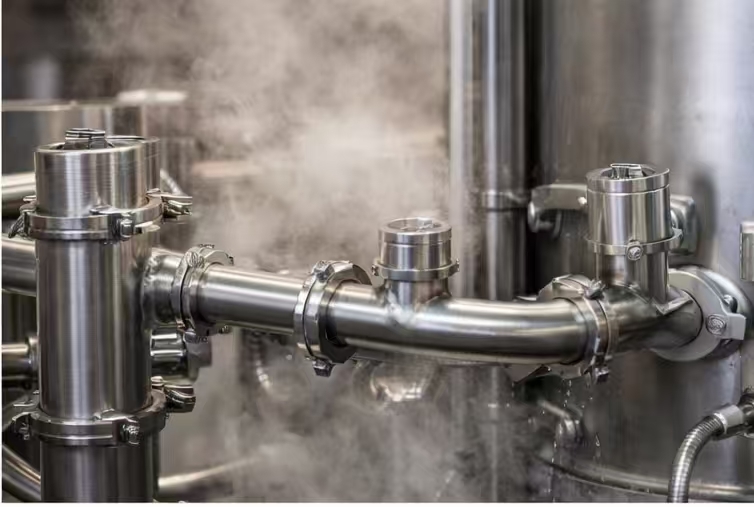
Stainless Steel Pipe Nipples for Low Temperature Service
This point deserves its own section, because buyers often miss it.
When people hear “temperature tolerance,” they think heat first. But many failures come from the cold side.
A line in a cold room.
A winter outdoor install.
A skid sent to a colder country.
A system that sees chilled fluid, then hot cleaning, then cold again.
That kind of service is rough on a threaded connection. If the metal gets brittle, the risk goes up. Austenitic stainless steel is much better in this zone. It keeps toughness where standard carbon steel may not. So if your customer works in cold storage, food processing, marine export, or low-temp chemical service, stainless steel pipe nipples are usually the safer spec.
Stainless Steel Pipe Nipples for Hot Water, Steam Cleaning, and Chemical Washdown
This is where “shop-floor reality” matters more than brochure words.
In many plants, the line is not sitting in clean, dry air. It sees hot water, steam cleaning, detergent, chloride splash, condensation, and shutdown moisture. Carbon steel can survive some of that, sure. But once the coating gets scratched, or the line sweats, or the heat-cool cycle repeats, the corrosion clock starts ticking.
That is why stainless often wins in:
- food and beverage areas
- chemical plants
- water treatment packages
- sanitary equipment tie-ins
- OEM skids that get washed often
- export systems going into humid climates
This is not just about corrosion resistance as a nice extra. It is about stopping the usual headache: seized threads, ugly rust bleed, leak paths at make-up, and warranty noise from the end user. That stuff is pain. Everybody in this trade knows it.
304 vs 316 Stainless Steel Pipe Nipples
If the buyer already accepts stainless, the next question is usually 304 or 316.
304 Stainless Steel Pipe Nipples
304 is the common all-rounder. It is clean, durable, and works for many water, food-contact-adjacent, and general industrial jobs. It is the easy upgrade path when carbon steel feels risky but the service is not ultra-aggressive.
316 Stainless Steel Pipe Nipples
316 is the smarter pick when the environment is harsher, especially where chlorides, chemicals, marine air, or more demanding washdown exist. If the service is hot and corrosive at the same time, 316 often makes more sense.
So when customers ask, “Do I really need 316?” the answer is: not always, but when chloride or chemical exposure joins the temperature issue, 316 can save a lot of trouble later. Your public site also highlights both 304 and 316 under stainless fittings and stainless nipples, so that product path is already there.
Pipe Nipple Selection for Fire Protection, Plumbing, HVAC, and OEM Projects
This is where the buying decision gets practical.
Fire Protection Pipe Nipples
For many fire protection lines, carbon steel or galvanized pipe nipples remain common because the service is familiar and the spec is standardized. But if the job has outdoor exposure, wet conditions, or more aggressive surroundings, the material choice needs another look. Your site already serves this market.
Plumbing and Water Supply Pipe Nipples
Hot and cold water lines are not just “water lines.” They bring temperature cycling, scale, moisture, and sometimes strict cleanliness demands. Stainless is often the cleaner long-run move.
OEM and Custom Pipe Nipple Orders
For OEM buyers, the material choice affects more than field life. It affects assembly speed, thread consistency, packing mix, documentation, and cross-border repeatability. If you are building skids, modules, or private-label kits, you don’t want one batch threading nice and the next batch chasing leaks in assembly. That is why custom supply matters almost as much as material grade. Your site clearly pushes custom pipe nipples, OEM, private label, mixed orders, and bulk supply, which is exactly what these buyers need.
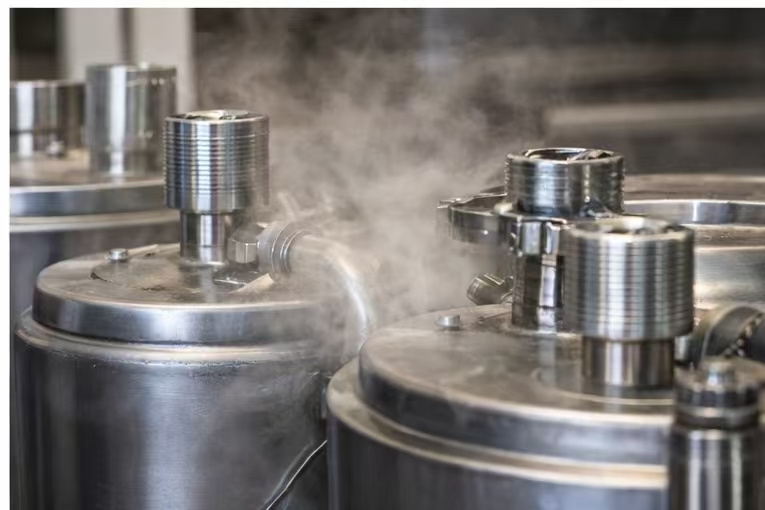
Why Buyers Move to One-Stop Supply Instead of Buying Piece by Piece
This is the part many blogs skip, but real buyers don’t.
The material question is only half the deal. The other half is supply chain drag. If one vendor does the stainless steel pipe nipples, another does black steel pipe nipples, another does threaded 90° elbows, and another does welded threaded fittings, the PO gets messy fast.
A one-stop supplier helps buyers bundle:
- stainless steel pipe nipples
- black steel pipe nipples
- galvanized pipe nipples
- seamless threaded pipe fittings
- welded threaded pipe fittings
- threaded 90° elbow and 90° elbow
- stainless steel fittings
- king nipples
That saves back-and-forth, makes mixed-container planning easier, and cuts spec confusion. For wholesalers, construction buyers, industrial machinery makers, hardware chains, and exporters, that is real value. It is not flashy. It just works.
This is also where a brand mention like GuoCao fits naturally. Buyers in this market usually don’t need big talk. They need a supplier that can do custom cut lengths, OEM/ODM, batch consistency, NPT or BSPT threads, and mixed wholesale orders without drama. If GuoCao can support that kind of supply model, that is a real selling point, not empty branding.
Carbon Steel or Stainless Steel Pipe Nipples: Which One Should You Buy?
Here is the simple answer.
Choose carbon steel pipe nipples when the service is normal, dry enough, familiar, and price-sensitive.
Choose stainless steel pipe nipples when the service is colder, hotter, cleaner, wetter, more corrosive, or more likely to cycle hard.
And if the line is critical, don’t buy only by unit price. Buy by failure risk. A cheap threaded nipple that leaks after thermal cycling is not cheap. It is just delayed trouble.
For B2B buyers, the smart move is not chasing the lowest quote. It is matching the material to the service, then working with a supplier that can hold thread quality, size tolerance, documents, and repeat supply across bulk orders. That part matter a lot. Maybe more than people admit.
If you want this topic turned into a full SEO blog post with meta title, meta description, FAQ schema-ready Q&A, and product CTA blocks for your site, I can draft that next.